
Your Thermal Environment
Temperature is only part of the picture.
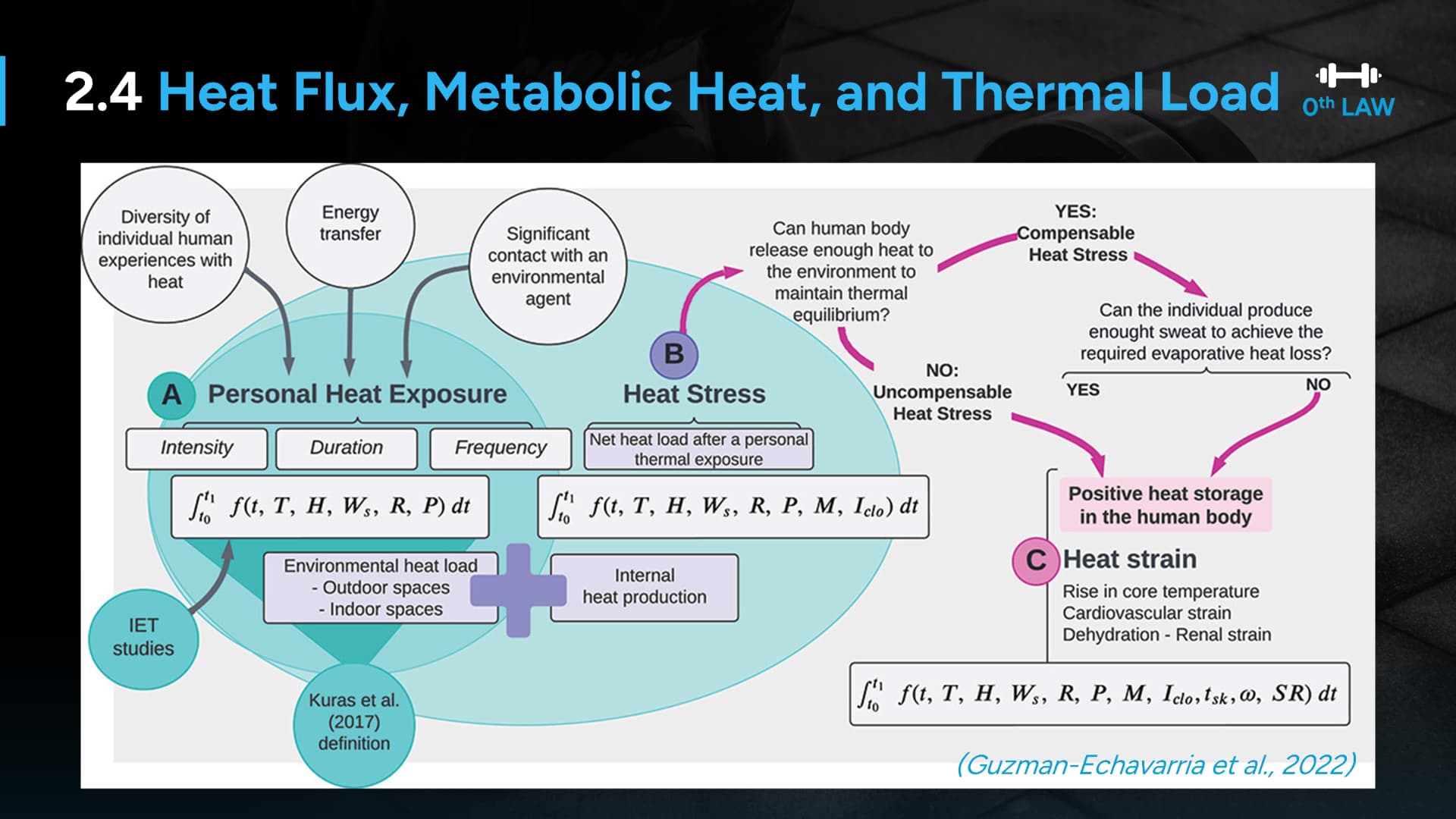
Humidity can make sweat evaporation less effective. Direct sun adds radiant heat. Clothing and equipment can restrict heat exchange. Air movement changes heat transfer, but very hot moving air is not a guarantee of cooling.
Your Thermal Risk score combines the conditions and session details you enter. Its 0–100 value is a planning index, not a percentage chance of heat illness or a measurement of your body temperature. The drivers help you see which inputs contribute most to your result.
Check the inputs before acting on the output. A shaded outdoor break and a break in direct sun are different scenarios. An indoor temperature estimate is also less informative if the room becomes warmer during a long session.
Use the score to consider changes such as shade, reduced intensity, shorter exposure or more recovery time. Using Kühler does not turn an unsuitable session into a safe one, and symptoms take priority over the score.
Check the top drivers, then change what you can.
Source modules
Adapted from 0th Law course modules 2, 5. These short lessons do not award CEUs or certificates.